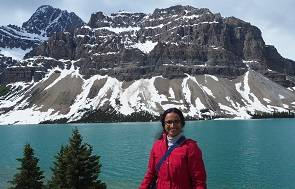
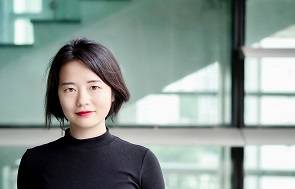
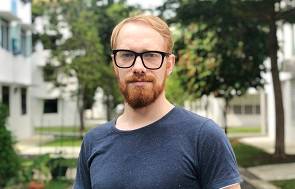
At TUMCREATE, as we prepare to conclude our research in Phase Two – Towards the Ultimate Public Transport System, we would like to highlight our researchers who continue to make significant contributions to the programme. Through our interview series, People behind the Science, we talk to our researchers to discover more about them and their stories. It’s a pleasure to have Penny Kong, from the Design for Autonomous Mobility (DAM) team, with us for this interview. Penny is a Singaporean researcher in our multinational research institute. As someone who was born and raised in Singapore, other researchers tend to look for her for recommendations of local places and activities, only to find out that they have visited more sights and places than her! A graduate from the National University of Singapore (NUS) in Architecture, Penny also shared with us some of her likes for arts such as dance, photography and films. Q: Tell us about yourself and what you do… I am a Research Associate with the DAM team, where we have a slightly different take, compared to the engineering perspective, on autonomous vehicle (AV) research. We follow a human-centred design approach so our research places people and the local context as its foundation and builds a narrative from there. Working with both qualitative and quantitative data, we try to understand the needs, desires, backgrounds and abilities, among other characteristics, of the people we are creating the future transport system for. In a way, we act as advocates for the user, which in this case are the passengers and potential passengers. All that information is combined with technical knowledge on subjects like manufacturing processes, aesthetics, human factors, and psychology and translated into design solutions for the module, infrastructure and human-machine interface. Q: Who or what inspired you to be in your field of research? I would say I meandered into design, and more specifically, industrial design. I was not the kind of person who always knew what they wanted to do when they grew up. As a kid, I did love reading, writing, drawing, and playing with Lego… the kinds of activities you might associate with creative or artistic types, but prior to university, it never occurred to me to pursue design professionally. I was studying hospitality when I started a part-time job as a theatre usher. During one of the events when I was on duty, Tim Brown, the CEO and president of international design agency IDEO, happened to be the speaker. It was the first time I’d heard of human-centred design, design thinking and the like. By then, I was probably in my first- or second-year doing architecture at NUS. That talk really sparked an interest in human-centred design and user research for me. It was a couple more years and a bit more meandering after that talk before I landed at TUMCREATE, where I started doing research in design. Q: What are some of the challenges for you in your field of research? One of my challenges is distinguishing research for design from research about design. The former is about applied projects where we explore the problem and context to design a solution, while the latter is about producing knowledge for the field of design itself. It means I always need to be conscious of the intention behind the work I do so as not to conflate research questions, methods or results for either of them. Another challenge lies in the interdisciplinary nature of design and design research. For example, we draw from human factors research to inform design development and use social science methods, like surveys or interviews, so it is important to understand how to apply the various research methods and knowledge to my own work. It is something I’ve enjoyed learning about in the past few years! Q: Tell us about your work and journey in TUMCREATE… I joined the DAM team in 2017. My focus is on investigating the preferences, expectations and acceptance for AVs, using the concept of DART, in Singapore. At the same time, I’m doing my PhD on emotional design for AV human-machine interfaces, where I look at how we can craft mobility experiences to evoke certain emotions for the diverse group of people who take public transport. One of the projects that I have learned a lot from was the organisation of the Singapore edition of a global dialogue on driverless mobility. It was really rewarding being able to engage with the community while collaborating with both our local co-organisers from the Singapore University of Technology and Design and the global organisers from Missions Publiques, who are based in France. We got a lot of insightful data from the dialogue, which we’re now writing a paper about. Another project I’m proud to be a part of involves defining the standards for future AV deployment in Singapore, where I’m coordinating a small team comprising various stakeholders from academia, industry and more. I think mobility is a core part of modern life and AVs would have a huge impact on many levels. There’s the micro perspective of looking at how people will interact with AVs, and there’s the macro-level changes in society and the urban fabric. I’m really happy to be a part of this global discourse on mobility research. Q: What are some of your plans in the future? I have two big goals I want to accomplish at the moment. One is to work on improving my command of German, which I started learning last year, and the other is to complete my PhD. I am in the final stages now but there is still a lot I want to do. In the longer-term, I would like to continue working on how we shape people’s experiences with mobility and technology, in Singapore and beyond. (We challenge Penny to try and describe her field of work to young children who might be interested in her field.) Q: How would you describe