TUMCREATE

Edit Template

In The News

TUM President to TUMCREATE_14June

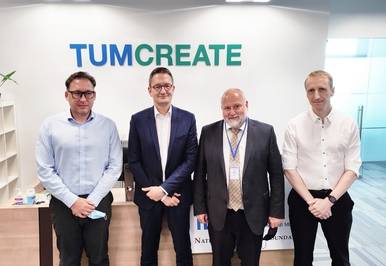
TUM President Visit to TUMCREATE Saw Deepened Collaboration and Scientific Exchanges between TUMCREATE and TUM

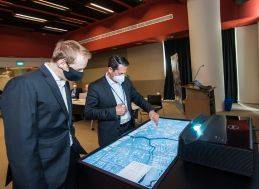
The President of the Technical University of Munich, Prof. Thomas Hofmann visited TUMCREATE on 14 June, which saw several insightful scientific exchanges and deepened collaboration between Germany and Singapore.  Over the years, TUMCREATE evolved from delving in the mobility research area of Singapore, to diversifying to several new fronts – with new projects set in motion dedicated to address some of the most relevant challenges that Singapore is facing. This includes scientific areas in food technology, healthcare, and clean energy. With several established publications on the mobility front, TUMCREATE too continues to find research breakthroughs alongside several prominent scientific researchers at TUMCREATE.  The visit by Prof. Thomas Hofmann saw several opportunities for collaboration between Singapore and Germany in driving research innovations and initiating meaningful conversations between Singapore and Germany to solve global issues with focus in Singapore.The visit too enabled much interactions and exchanges with the researchers and investigators on progress and discussing direction on future projects.

TUMCREATE_Create Webinar_Tobias Massier

TUMCREATE Presents Breaking Down Barriers – Singapore’s Pathway to Carbon Neutrality

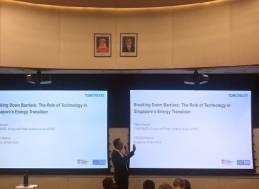
With the impact of #climatechange becoming increasingly palpable, the need for climate action has become more pressing than ever.    In the monthly #CREATESeminar series by CREATE, Dr. Tobias Massier, the Lead Principal Scientist of TUMCREATE’s Pathway to Carbon Neutrality, gave a talk about Singapore’s energy transition and its path to carbon neutrality and the role technology can play in this space.   As Singapore sets a slew of initiatives in motion to reach net-zero emissions in the power sector by 2050, many questions begin to unfurl: With 95 per cent of Singapore’s electricity generating from natural gas, what does it mean to be #carbonneutral? How does it affect the supply of energy sources, and how are we achieving net zero emissions?   In this seminar, Dr. Massier shared some strategies researched in the Singapore’s Pathway to Carbon Neutrality project, in which carbon emissions can be mitigated from the demand side, such as utilising cleaner-energy vehicles and making the switch to alternative systems, such as using a central cooling system. In a separate Geothermal-Driven Technologies for Passing Enabling of Urban Sustainability Solutions project, NTU and TUMCREATE have also been exploring Singapore’s #geothermal potential and how it could help to cover the cooling demand in Singapore. Other strategies discussed to reduce Singapore’s carbon footprint are #carboncapture, utilisation and storage, electricity imports, alternative fuels and, in the further distant future – #nuclearpower.   Taken together, they tell a larger narrative of our efforts towards carbon neutrality, and of a long journey in achieving net zero carbon emissions at the core of tackling climate change. We hope the seminar provided an opportunity to learn about some strategies for climate action. We believe that learning in-depth and the magnitude of the work in achieving carbon neutrality would lend more power and impact to the end work itself.    #sustainability #sustainablefuture

Singapore Pathway to Carbon Neutrality

Singapore’s Pathway to Carbon Neutrality Analysis of New Technologies

Prof Thomas Hamacher (Chair of Renewable and Sustainable Energy Systems, TUM) and S Viswanathan (ERI@N, NTU) were recently awarded the Intra-CREATE project starting on 1 October 2022,  “Singapore’s Pathway to Carbon Neutrality Analysis of New Technologies”. The project The Principal Scientist coordinating the project is Dr Tobias Massier from TUMCREATE.  This is a 3 year Intra-CREATE project in collaboration with NTU to address Singapore’s energy future and the project will be based in Singapore. This project is aligned with Singapore’s commitment to sustainable development and achieving long-term net-zero emissions. Emissions in Singapore are dominated by the power generation, industry and transport sectors. The most significant component is carbon dioxide, primarily from burning fossil fuels in our cars, trucks, ships, trains and planes in the Transport sector,  while the residential and commercial sectors use electricity generated from burning natutal gas in power stations. Singapore’s mitigation efforts includes improving energy efficiency through several programmes by tapping on four switches to transform our energy supply. 1. Solar to counter the intermittency of renewable energy sources 2. Regional  Power Grids to access low-carbon electricity 3. Emerging Low-Carbon Alternatives like the utilization and storage (CCUS) technologies and hydrogen to help reduce carbon footprint 4. Natural Gas produces the least amount of carbon emissions and is currently still the dominant fuel for Singapore. However, there are still limitations. How does TUMCREATE’s new Singapore’s Pathway to Carbon Neutrality Project Analysis of New Technologies ome in? Three groups of scenarios will be examined. The first scenario looks at the potential of the development of a global market for hydrogen or synfuels with Singapore as a regional hub for these energy carriers. The second group assumes intense cooperation of ASEAN countries in the field of energy. The third group remains in the fossil fuel paradigm but reduces emissions using CCU, CCUS or carbon production with Singapore as the central hub in the ASEAN region.  Click to read more about the project HERE If you are interested in embarking on this meaningful journey, do check out the Careers page HERE

TUMCREATE Webinar and News (6)

EU Commission S&T, Deputy Director General Meets European Scientists at TUMCREATE

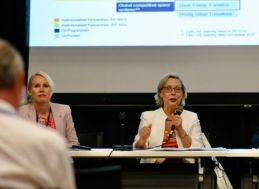
TUMCREATE had the honor of co-hosting with EURAXESS ASEAN for an exchange between Ms. Ratso, the Deputy Director General at DG RTD of the European Commission and the key members of the expatriate European researcher community here in Singapore on 15 June 2022.   EURAXESS ASEAN is an initiative of the European Commission established with the aim to provide free access to information about research in Europe, opportunities for research funding, international collaboration and trans-national mobility.   The key purpose of visiting TUMCREATE is to engage with local stakeholders to get a better understanding of the strengths and focus areas of Singapore-based research and to explore closer collaboration with Europe. The expatriate European research community shared insights into their research activities and presented their suggestions on where there is potential for greater collaboration with Europe and how this could best be achieved.   The exchange concluded positively with great connections.

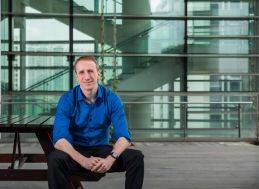
DAvid Eckhoff

Dr. David Eckhoff, one of the Top Speakers for the Automotive Charging & Battery ASEAN 1st International Conference

Dr. David Eckhoff, Principal Scientist and Director of the MoVES laboratory at TUMCREATE is included among the Top Speakers at the 1st International Conference for the Automotive Charging & Battery ASEAN.  The 2 day conference will be held at the Singapore Battery Consortium Fusionopolis Way 2, 138634 Singapore on 12 and 13 September 2022. He will be discussing how digital twin and simulation software is utilised to support the transition to electric transportation, including a particular focus on modelling mobility aspects at a city scale.  His research interests include privacy protection, smart cities, vehicular networks, and intelligent transportation systems with a particular focus on modelling and simulation. Find out more about Dr. David Eckhoff HERE              

DPM Heng _Dr

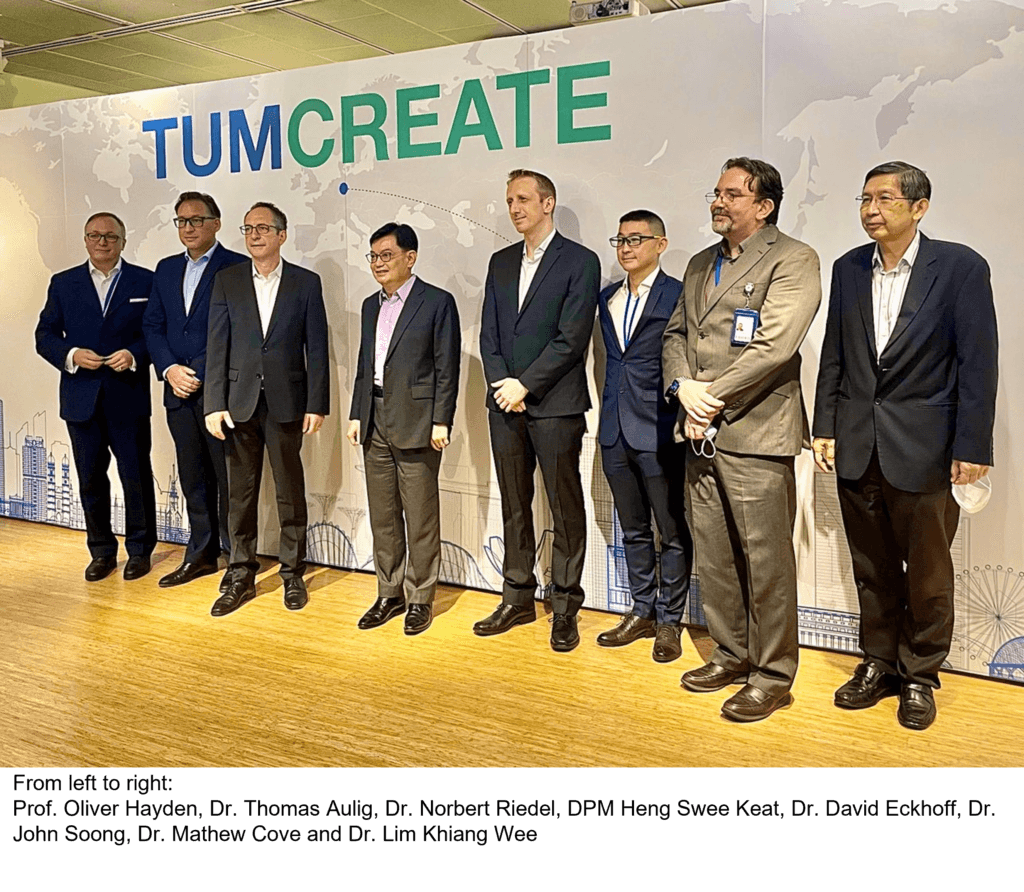
DPM Heng Swee Keat visits TUMCREATE

DPM Heng Swee Keat visited TUMCREATE in June 2022 to learn about the collaborative research projects with its Singaporean Partners.  The German Ambassador, Dr. Norbert Riedel was also present.   Dr. David Eckhoff (4th from the right) presented the CityMOS: City Mobility Simulator which was developed at TUMCREATE. Prof. Oliver Hayden (1st from the left)  and Dr. Matthew Cove (2nd from the right) presented CellFACE which will be developed at TUMCREATE as well.    TUMCREATE commits to driving innovation towards helping Singapore and the world move forward with urban sustainability.       Picture from left to right:  Prof. Oliver Hayden, Dr. Thomas Aulig, Dr. Norbert Riedel, DPM Heng Swee Keat, Dr. David Eckhoff, Dr. John Soong, Dr. Mathew Cove and Dr. Lim Khiang Wee 

Cellface Invite

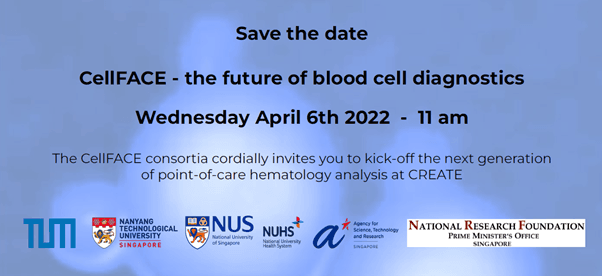
CellFACE Demo Day

Professor Oliver Hayden, Technical University of Munich, leads a team of highly interdisciplinary scientists for the NRF project “CellFACE – Imaging-based Flow Cytometry for Hidden Haematology Biomarker”. CellFACE is funded by NRF aiming for hidden blood cell biomarker. Using a point-of-care technology combined with a clinically-acceptable workflow the team will provide functional hematology information to the clinical routine for the benefit of patients. A demonstration with engineering and clinical partners from NUHS, NTU, NUS, A*Star, and TUM was given on 6 April 2022 at 11 a.m.

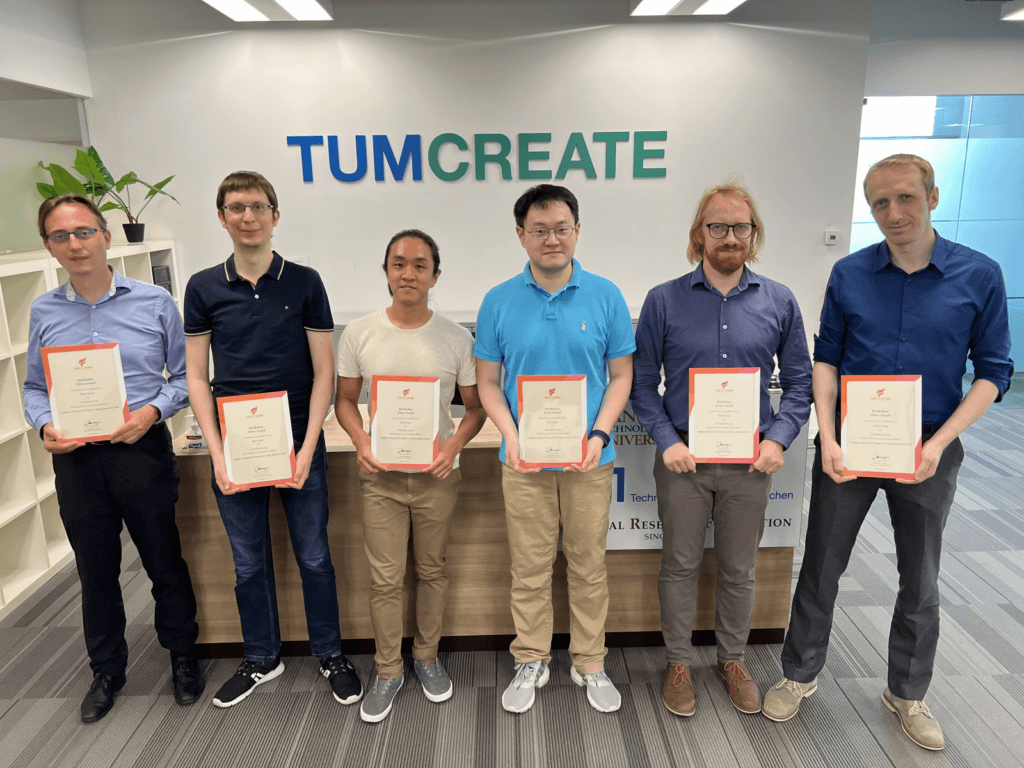
TUMCREATE researchers recognised for contributions to Singapore’s 2040 vision for all vehicles to run on cleaner energy

The SITEM project team including TUMCREATE researchers has received the prestigious Borderless Silver Award 2022 in the annual Firefly Awards by the Ministry of Trade and Industry, Singapore (MTI). The annual Firefly Awards celebrate the best of ideas as well as recognise teams and individuals within the MTI Family who have exemplified strengths in the respective Award categories. The TUMCREATE researchers Dr Tobias Massier, Dr David Eckhoff, Dr Daniel Zehe, Marc Gallet, Kuo Yu-Jeng, Xiao Jiajian, and Dr Arif Ahmed were honoured when their efforts were recognised by the Ministry of Trade and Industry, Singapore (MTI). The team would also like to thank fellow researchers and previous team members Dr Sebastian Troitzsch, Andrej Trpovski, and Nagacharan Teja Tangirala for their efforts and achievements, contributing to the success of the research project. From left: Dr Tobias Massier, Marc Gallet, Kuo Yu-Jeng, Xiao Jiajian, Dr Daniel Zehe, Dr David Eckhoff   The SITEM Project Team: A*STAR IHPC & TUMCREATE’s multidisciplinary researchers   Singapore’s 2040 vision to phase out internal combustion engine vehicles and have all vehicles run on cleaner energy to contribute towards Singapore’s decarbonisation commitments, requires a large-scale, multi-agency effort to provide charging infrastructure, electrify public vehicles, and upgrade the electrical grid to accommodate the new demand. The Singapore Integrated Transport and Energy Model (SITEM) describes a research project that supports Singapore’s planning for the transition to electric vehicles (EVs) nationwide. Commissioned by the Prime Minister’s Public Sector Science and Technology Policy and Plans Office (S&TPPO) and in collaboration with all relevant agencies, researchers from A*STAR and TUMCREATE set out to create the first high-fidelity, island-wide simulation of EV transport in Singapore. It is key project with public value for Singapore that TUMCREATE has been working on together with A*STAR’s Institute of High Performance Computing. SITEM is used to conduct a comprehensive analysis of projected electric vehicle (EV) charging patterns and energy demand, while integrating multiple aspects of mobility and energy modelling, including the movements of individual vehicles, drivers’ decisions about where and when to charge, and the interaction of EV charging demand with electricity grid capacity. The SITEM project builds on two primary simulation technologies developed by TUMCREATE: City Mobility Simulator (CityMoS) utilises high-performance computing techniques to enable high-detail transport simulation of the entire island of Singapore, while maintaining short turnaround times. Multi Energy System Modelling & Optimisation (MESMO) is an advanced software framework that combines simulation of electrical grids and optimisation techniques to mitigate the grid impact of distributed energy resources (such as photovoltaics) and new types of loads (such as EV charging). Robust modelling and simulation have potential to reap significant cost avoidance, as projects in the infrastructure and energy space are typically costly and hard to re-work once in the implementation stage. To model such a large-scale and multi-layered system at high resolution, the researchers are employing advanced capabilities including large scale complex systems modelling and optimisation, high performance and distributed computing, advanced data analytics and empirically grounded agent-based modelling of human behaviour. Through advanced scenario modelling and simulation, SITEM delivers insights on how Singapore can optimise EV charging stations’ placement to address drivers’ charging needs and to efficiently allocate energy demand and upgrades across the power grid. SITEM’s has enabled regulatory agencies to explore and evaluate varied pathways to vehicle electrification.   Further information on SITEM

Schnorr-Photo-small

German State Secretary at the Federal Ministry for Digital and Transport visits TUMCREATE

On 27 May 2022, the German State Secretary at the Federal Ministry for Digital and Transport Stefan Schnorr visited TUMCREATE to discuss research insights on mobility patterns and related energy demand of a Megacity like Singapore on its pathway to electrification with TUMCREATE’s lead scientists. TUMCREATE’s two primary simulation technologies, MESMO and CityMoS, were demonstrated and ideas which would be useful to testbed in Germany as well were explored. From left: Dr Thomas Aulig, State Secretary Stefan Schnorr, Heiko Wildner, Dr David Eckhoff Dr Tobias Massier showcased his research on the simulation of electrical grids and demonstrated TUMCREATE’s Multi Energy System Modelling and Optimisation (MESMO) tool, that combines simulation of electrical grids and optimisation techniques to mitigate the grid impact of distributed energy resources (such as photovoltaics) and new types of loads (such as EV charging). Dr David Eckhoff provided research insights on city mobility and demonstrated TUMCREATE’s City Mobility Simulator (CityMoS), which utilises high-performance computing techniques to enable high-detail transport simulation of the entire island of Singapore, while maintaining short turnaround times and enabling the efficient exploration of wide parameter spaces. The live coupling of the mobility simulator CityMoS and the power grid simulator MESMO provides insights into the dependencies of both systems. These advanced scenario modelling capabilities enable next-generation urban transport planning in smart cities. TUMCREATE’s simulation tools can answer a wide range of what-if questions in the urban mobility domain, such as placement of e-charging stations, while exploring and evaluating varied pathways to vehicle electrification.   Further information on CityMoS Further information on MESMO

Page Preview

People Behind the Science – Sebastian Troitzsch

At TUMCREATE, as we prepare to conclude our research in Phase Two – Towards the Ultimate Public Transport System, we would like to highlight our researchers who continue to make significant contributions to the programme. Through our interview series, People behind the Science, we talk to our researchers to discover more about them and their stories.   We talk to Sebastian Troitzsch from the Electrification Suite & Test Lab (ESTL) team.    Sebastian grew up in north-eastern Germany and completed his bachelor and masters degree at RWTH Aachen University, a route not as conventional as most of the researchers in TUMCREATE had taken. As someone who likes to take up many hobbies, he shares that he played the accordion when he was young and started to take up rock climbing and bouldering when he came to Singapore. He is also an avid fan of indie movies and enjoys showcases being held at the Projector, where he highly recommends the recent film, Tiong Bahru Social Club.   Q: Tell us about yourself and what you do… I am a PhD student with the ESTL team, that focuses on energy research in TUMCREATE, and my work revolves around ‘smart grid’ topics. For example, I am now investigating whether the charging of electric vehicles (EVs), especially when there is a large adoption for them, will cause any challenges to the electric grid in Singapore and what are the mitigation strategies that are best suited to address the issues. By doing so, we can ensure a smoother transition for electric vehicles and prevent any impacts that may be disruptive. Currently, I am mainly involved in developing the Flexible Distribution Grid Demonstrator (FLEDGE) tool that helps to investigate this area with the rest of my team.   Q: What made you come to Singapore, and how has it been like living here? I first came to Singapore as an exchange student with the National University of Singapore (NUS) in 2014. I had always wanted to explore Asia and Singapore, with its multi-cultural setting, seemed like a great starting point. I really enjoyed living here and I got a variety of experiences and opportunities to meet people from all around the world. I ended up extending my stay here and I’ve been here ever since! Some of the key takeaways from my time in Singapore are my newfound appreciation for KTV and the fact that food that are worth queuing for aren’t necessarily associated with fancy restaurants.   Q: Who or what inspired you to be in your field of research? Originally, I wanted to become an aerospace engineer and started studying mechanical engineering. However, in 2011, as many might still remember, the Fukushima nuclear accident happened and caused many countries, especially Germany, to reconsider future energy supplies. Some countries took the accident as a warning and declared grand goals for the deployment of renewable energy. This really sparked my interest in the challenges behind transitioning from conventional energy resources to intermittent renewables. I even became involved in setting up a local ‘energy club’ in school to facilitate discussions on this topic! Eventually, knowing where my interest lies, I switched my specialisation to energy engineering and I can confidently say that I have not regretted my choice ever since.   Q: What are some of the challenges for you in your field of research? One of the core themes of my research is demand-side flexibility, which is the ability of electric loads to be rescheduled according to the availability of energy supply. For example, the power demand of an air-conditioned system can be scheduled in such a way that it maximises the use of available solar energy generation. As such, a key challenge lies in translating the theoretical flexibility potentials on the demand side into economic benefits for the consumers.   Air-conditioning systems in buildings are often operated on a fixed schedule with no means for intervention and the ‘smart controllers’, which would enable the flexibility from our theoretical studies, have not yet been demonstrated on a large scale and are met with resistance from practitioners. There is also a big question mark on consumers’ acceptance as the flexible operation may impact their thermal comfort. To this end, I think there is an opportunity here for social scientists and engineers to come together and explore what incentive mechanisms can help to promote these applications. I am looking forward to seeing how this plays out in the future.   Q: Tell us about your work and journey in TUMCREATE… My endeavour at TUMCREATE started in 2016 as a research assistant looking to complete my master’s thesis. In 2017, I became a research associate and started my PhD. Initially, I worked on the demand-side flexibility of air-conditioned buildings and it evolved into various research topics around the participation of flexible loads in the energy sector. For example, in the project Connecting District Energy and Power Systems in Future Singaporean New Towns (CONCEPT), I worked with the Singapore-ETH Centre (SEC) to demonstrate how demand-side flexibility can help reduce investment costs in the planning stage of urban development projects.   More recently, my work has been focused on developing FLEDGE, a software tool for district-scale energy systems modelling and optimization. The idea is to develop a tool that is more application-oriented, based on the various theoretical methodologies which had already been developed in the team. FLEDGE is made available as an open-source project and has prompted several collaborations with researchers at the Technical University of Munich (TUM) as well as the Agency for Science, Technology and Research (A*STAR).   Q: What are some of your plans in the future? Well, just like any doctoral student, I hope to complete my PhD thesis sooner rather than later! Once that it is done, I will focus on further developing and promoting FLEDGE to government agencies, research institutions, and other stakeholders in Singapore that will benefit from such a tool, especially now that Singapore is moving towards the adoption of electric vehicles. It will be interesting to learn how FLEDGE can be

Scroll to Top