TUMCREATE

Edit Template

In The News

Johann TUMKolleg-header-blog

From TUMKolleg to TUMCREATE: Johann’s Internship with the LightSPAN team

When Johann Probst, a senior high school student in the TUMKolleg programme was searching for an internship, he chose TUMCREATE – a multidisciplinary research institute in Singapore.  Drawn by the health-tech research projects and the chance to work with an international team in TUM’s overseas campus, he flew from Germany to join a team of enthusiastic scientists and immersed himself in Singapore’s culture.  While such opportunities may feel daunting for many 18-year-olds, Johann is no stranger to them. His semester in Vancouver, Canada, as part of a high school exchange programme in 2023, sparked his pursuit of global learning.  At TUMCREATE, Johann joined the LightSPAN research team to support the preparation of a randomised controlled trial testing LightUP, an app-based digital-health intervention. The project investigates how light exposure can be optimised to support health and well-being across the lifespan.   Read about Johann’s time in TUMCREATE and the valuable lessons he gained along the way.         As a TUMKolleg student, you work on a specially designed research project at the Technical University of Munich (TUM) once a week. Could you share more about what you are working on?  We conduct individual research projects at a TUM professorship or research group of our choice. While we are taught in high school following an in-depth curriculum using diverse forms of teaching and learning, we can take part in selected courses at the university. Our research projects are spread across various TUM departments.   With my background in rowing, I chose the Department of Health and Sports Sciences to conduct a study investigating the “Maximum oxygen uptake and usage in rowing: Comparison of full body exercise versus single muscle training protocols” under the supervision of Dr. Fabian Stöcker.    That’s interesting! Tell us more about your research project.  The project started in January 2025 and is scheduled to conclude by the end of October. For the last eight months, I’ve spent my Wednesdays at TUM overseeing rowing performance tests to determine the maximum amount of oxygen used by different muscle groups during exertion. We performed three different exertion test protocols for each of the 12 participants, focusing on the legs, upper body, and full body respectively. Our results show that the amount of oxygen used during the exertion of the legs was similar to the amount of oxygen used by the whole body. Only a limited amount of blood can be used by the muscles during exertion, possibly because the blood pressure in the brain needs to be kept above a minimum threshold. These findings have practical applications: They can enhance the rowers’ training strategies. My final step is to write and submit a research paper.   How did you learn about the opportunity at TUMCREATE and what made you go for it?  At TUMKolleg, we were challenged to seek out an internship at an international company or institution. I came across TUMCREATE which stood out for its international orientation and the focus on projects around digital health.   While I love to travel and have been to different countries and cultures, I had never been to Asia. Having the chance to combine the internship with a dive into Singapore, one of the most fascinating cities of the world, turned out to be a unique and rewarding opportunity for me.    What was your experience as a Research Assistant working on the LightSPAN research project at TUMCREATE like?  During my internship with the LightSPAN group, the team was a few weeks away from testing their new “LightUP” app and all its components out in the open for the first time, and many preparations were underway. I learnt how many hours of careful and dedicated work it takes to get ready all the components from the app availability over device setup to its final testing. I saw how closely the team needed to work together to make the project happen.   My task was to come up with and evaluate ways to adapt the project to other climatic regions such as Germany. I am very thankful that Dr. Resshaya Murukesu, postdoctoral fellow, and Prof. Dr. Manuel Spitschan, principal investigator of LightSPAN, took the time to show and explain all the aspects of the project and the underlying biological principles and mechanisms. All the members of the group really supported me, and it made integrating into a new environment easier.     Share with us one major highlight during your time here.  The highlight of my time in Singapore was the presentation of my work not only to the whole LightSPAN team, but also to the rest of TUMCREATE. Presenting in front of such an experienced group was challenging, but it made me proud as I was able to share the results of my time at LightSPAN. In fact, to be part of the team was an exceptional experience.     What’s next for you?  I’m preparing for the Abitur exams, the German general university entrance qualification, an A-levels equivalent, to graduate in early June 2026. I’ll commence university later in 2026. I’ve not decided yet, but it’ll be within the fields of medicine or engineering. I also hope to discover new places and learn more about international research projects.   The LightSPAN project is a collaboration between TUMCREATE and the Yong Loo Lin School of Medicine, National University of Singapore (NUS Medicine) and is supported by the National Research Foundation, Prime Minister’s Office, Singapore under its Campus for Research Excellence and Technological Enterprise (CREATE) programme. 

CellFACE-header-image

CellFACE awarded SMART Innovation Grant 2.0

We are proud to share that CellFACE has been awarded the Singapore-MIT Alliance for Research & Technology (SMART) Innovation Grant 2.0 to advance and commercialise our AI-powered, real-time phase imaging flow cytometry. CellFACE delivers point-of-care results of activated leukocytes and cell aggregates in just 1.5 minutes, matching the needs for acute care, such as in the operating theatre. Click here to watch the Revolutionise Acute Care with CellFACE video With the support of the SMART Innovation Grant 2.0, we are moving forward into business development and clinical validation, bringing real-time, label-free diagnostics from the bench to the bedside. Recently, on 28 August 2025, the CellFACE team wrapped up their research project with a closing event that brought both Munich and Singapore clinicians together. The session featured a deep dive into the scientific findings and how the technology created at CREATE differs from other imaging flow cytometry systems for the point-of-care. The workflow processes big amounts of data and generates clinical value for infection diagnostics in critical time windows.  Physicians and engineers also provided insights about the future of hematology, and PD Dr Martin Schlegel from the Technical University of Munich gave a keynote on sepsis diagnostics. A big thank you to all attendees for joining us and for the lively round-table discussion on the clinical unmet needs.

TUMCREATE partnership with Venture Builders

TUMCREATE establishes partnership with Venture Builders – Turion Labs and Blue Incube

TUMCREATE, the research institute of the Technical University of Munich (TUM) in Singapore, is dedicated to translating academic research into applications and impactful solutions.  Together with Turion Labs and Blue InCube, our new innovation partners, we are all fired up to kick off exciting activities and exchanges with them. We join forces to accelerate the mission of turning research into real-world impact – with TUM’s deep-tech DNA at its core!  These collaborations will help us bridge the gap between lab research and its adaptation in society across the depth and breadth of the TUMCREATE research teams.  Reflecting on the partnerships, Dr Stefan Klade, Chief Operating Officer and Director Research & Innovation at TUMCREATE, emphasised the value of working with trusted collaborators: “We are proud to link up to the experienced team of passionate experts at Turion Labs and Blue InCube! I genuinely look forward to identifying promising collaborative projects that add even more impact to our research.”  As an entrepreneurial university, TUM is recognised to be a global leader in creating sustainable innovation. The British magazine Times Higher Education’s 2025 University Impact Ranking repeatedly placed TUM top in the area of industry, innovation and infrastructure. “This is just the beginning. We’re excited about the possibilities of combining TUM and TUMCREATE’s research excellence and Blue InCube’s venture- building expertise with support from our industry networks and Enterprise Singapore. We’re excited to see what emerges from this German- Singapore partnership,” said CL Goh, Managing Partner at Blue InCube.  “Turion Labs was recently established to enable global deeptech innovators to access and thrive in South East Asia, starting with Health and Medical Sciences and in South East Asia’s largest single-entry market, Indonesia. We strongly believe that our partnership with TUMCREATE, which has become a shining beacon for deeptech research and innovation between Europe and Asia, will allow both entities to synergise our collective efforts for research outcomes to become meaningful and impactful outcomes that will benefit society as a whole,” said Alvin Ng, Director at Turion Labs.   

TUMCREATE researchers Global Fellows Programme 2025-header

TUMCREATE Researchers Strengthen their Soft Skills at Imperial-NTU-TUM Global Fellows Programme 2025

From sparking fresh ideas to building global connections – TUMCREATE doctoral researchers took collaboration and creativity to the next level at the Global Fellows Programme (GFP) 2025. This year’s fifth trilateral GFP was held in Munich, Germany, in partnership with Imperial in London, Nanyang Technological University (NTU) and Technical University of Munich (TUM).    (Photo credit: TUM-GS) Following the theme “Multidisciplinary Solutions for Climate-Responsive Societies,” our research associates Shiddalingeshwar Devihosur (Sid), Sophia Morsten, and Rishika Batra engaged in cross-cultural discussions and co-created innovative ideas to tackle global challenges for sustainability.  Sid is researching on the integration of renewable energies in ASEAN with a focus on power engineering jointly with teams from NTU. Rishika and Sophia are food technologists specialising in alternative protein as part of the flagship programme Proteins4Singapore. We caught up with Sid, Sophia and Rishika about their experiences with their peers in Munich.   Q. What was your main motivation to apply to the Global Fellows Programme?  Sid: One motivation was fostering inter-disciplinary collaboration with people from diverse backgrounds, something that is not always possible while working in a group from a similar field. Being rather new in the field, it is important for me to establish a strong network and to understand what other students are working on and how they overcome problems in their PhD.  Sophia: It was a valuable opportunity to connect with and get to know my “home institution,” since I had not studied at TUM before. I also saw it as a chance to step outside the research bubble of food science and explore possibilities that extend beyond my field.  Rishika: My primary motivation was to collaborate with researchers from diverse disciplines to explore innovative solutions to climate-related challenges. As a food science doctoral candidate working on sustainable alternative proteins, I wanted to expand my perspective beyond the lab by engaging with engineers from other disciplines, environmental scientists, and policy specialists. The programme offered a unique platform to exchange ideas, bridge disciplinary gaps, and develop actionable strategies for a climate-resilient solutions.    Q. What are your key takeaways from the 5-day programme?  Sid: The GFP allowed me to not only communicate from the perspective of an energy system modeler but also effectively listen to different perceptions to a common problem. Finding a consensus to resolve diverging opinions was also a crucial part of the programme. This is a common and foreseeable issue in academia, especially when working on a project consisting multiple working parts.   Sophia: It was fascinating to see how we could apply our existing skills to completely new projects, how challenging it is to communicate complex topics clearly, how many minds it takes to create something new, and how quickly a strong group spirit can develop.  Rishika: The programme reinforced the importance of integrating social, technological, and environmental dimensions when designing solutions. I learnt how multidisciplinary teams can accelerate impact by aligning expertise. The workshops also enhanced my skills in cross-cultural communication, rapid ideation, and translating scientific research into policy-relevant recommendations.   Q. Tell us what sort of creative innovations to address global challenges you have developed under the programme theme “Multidisciplinary solutions for climate-responsive societies”?  Sophia: I worked in the same team as Sid, and we tackled Delhi’s air pollution caused by stubble burning on the agricultural lands around the city. Our approach combined tradition and innovation; instead of burning crop residues, we explored turning them into greener biochar, which could be returned to farmers to enrich their soil. The controlled combustion process can further be used to produce energy, which we considered storing in used EV batteries. This circular solution not only reduces pollution but also adds value to existing practices, showing how multidisciplinary thinking can create practical, climate-responsive solutions.  Rishika: I was in another team and designed a draft proposal for tackling food waste in India in off-grid or resource-limited settings. Our approach was to integrate intelligent tracking on food packaging into an app. That app would enable all the different wholesalers of fruits and vegetables across Bangalore to reduce food waste.    Q. How does this contribute to your respective research work in renewable energy and alternative protein?  Sid: The learnings will be transferable to any field in a non-technical sense as the focus of the workshop – as emphasised by the coaches – was the process of collaboration rather than the technical aspect of the project. Collaborating and effective communication with people who may not understand the technical terminologies from my field were the biggest takeaways from this programme.  Sophia: It showed me how to transfer skills across disciplines. Collaborating with people from different backgrounds highlighted the importance of clear communication when explaining complex processes and how crucial it is to have a safe and trusting team environment where you feel comfortable asking any question.  Rishika: This programme brought fresh perspectives for me and taught me how to collaborate with people from other disciplines to further enhance my brainstorming skills. It also gave me an avenue, how I can put forth my ideas in a large group, through effective communication.    Q. Why should other doctoral candidates sign up for the Global Fellows Programme?  Sid: It’s a great platform to put yourself out of your comfort zone to network in a large setting, voice your opinions out loud, talk through ideas without any restrictions or being judged. With the hustle of your own PhD work, this serves as a wonderful change in routine to really learn so many things from so many people, and to foster great friendships and connections which will be certainly needed after completing your PhD. Highly recommended!  Sophia: I’d especially recommend it for early-career researchers. The programme brings together like-minded people who are eager to create something new. It challenges you to work in a larger team and develop a project in just one week – a skill that will be valuable in any future career. Along the way, I met wonderful peers whom I look forward to seeing again.  Rishika: The programme is a rare

TUMCREATE Singapore Pathway to Carbon Neutrality workshop 250305

TUMCREATE Engages Policymakers from Energy Sector in findings for Singapore’s Pathway to Carbon Neutrality

TUMCREATE’s Energy and Power Systems Group (EPSG) hosted a workshop on 5th March 2025, bringing together policymakers from the energy system sphere.   As the project moves into its final year, the team around the project’s lead PIs, Prof Dr Thomas Hamacher, Prof S Viswanathan, Prof Harald Klein, Dr Ding Ovi Lian and Dr Tobias Massier, Principal Scientist and Head of EPSG, presented a summary of their findings to date. This included the latest results on new energy technologies such as carbon capture and storage (CCS), liquid air energy storage, and hydrogen technology pathways.     Among other findings, the studies projected the energy and electricity demand for Singapore and the region. The team has integrated demand estimates and forecasts on the new energy technologies into its energy system model. This model has been proven to find the optimal power production mix for Southeast Asia with a high share of renewable energies, CCS plants, hydrogen and nuclear plants. The main finding from the energy system model is the future dominance of solar photovoltaics in the region to reduce carbon emissions from power generation.   The engaged experts discussed insights on the possible pathways for Singapore’s energy future which include electricity imports, carbon utilisation and Singapore as a hydrogen hub. The best options for Singapore’s energy future in the mid-term concluded a lively event.     These exchanges took place against the backdrop of Singapore’s Green Plan to use cleaner energy sources1, supporting the nation’s climate neutrality goals, its transition to net zero by 2050 and Singapore’s National Hydrogen strategy2.   The Singapore’s Pathway to Carbon Neutrality project is a collaboration with Nanyang Technological University (NTU). 

FOOD@CREATE Seminar 2025-1

Food@CREATE Seminar 2025: Exploring the Frontiers of Food Science and Technology

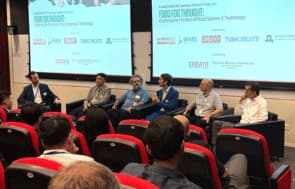
Over 200 researchers, scientific leaders, policymakers, and industry stakeholders gathered for a scientific exchange on the future of sustainable food production in Singapore and beyond at the Food@CREATE Seminar on 13th March 2025.   The fully booked seminar on the theme: ‘Food for Thought: Exploring the Frontiers of Food Science and Technology’ was supported by the National Research Foundation (NRF) on the CREATE campus. TUMCREATE and the co-organising research institutes – Illinois ARCS, Singapore-HUJ Alliance for Research and Enterprise (SHARE), Singapore-MIT Alliance for Research & Technology (SMART), and Wageningen University & Research, together with Nanyang Technological University hosted several engaging sessions with deep insights and inspiring discussions.    The five NRF-funded food research programmes came together to share advancements in alternative proteins, advanced food production systems, and sustainable agricultural innovations in support of Singapore’s ambitious “30 by 30” food security goals.      The welcome address by Dr Ngin Hoon Tong, Senior Director of the Science & Technology Division at the Singapore Food Agency (SFA), set the stage for insightful discussions. The introductory session emphasised the evolving environmental factors impacting Singapore’s food security and food safety. These challenges include climate change affecting production yields in the region, a volatile global food supply chain that may be prone to disruptions and emerging food innovations that could potentially introduce new food safety risks and contribute to higher regulatory concerns.    Researchers from various teams presented their work on novel food technologies and delved into breakthrough innovations during the talks, exploring cutting-edge advancements in food science and technology.      Among other programme introductions was Prof Yong-Su Jin’s presentation of challenges in applying biotechnology to foods. The leading investigator at the Illinois-ARCS’s Centre for Precision Fermentation and Sustainability described the use of microbial cell engineering to convert previously unutilised or inedible part of crops into molecules with nutritional value such as peptides, lipids, and vitamins.      Andrea Spaccasassi, a research fellow at TUMCREATE’s Proteins4Singapore project, presented his research on decoding the flavor of roasted chicken meat using the SENSOMICS approach in one of the deep-dive technical talks. After identifying and quantifying key odorants responsible for the characteristic aroma of roasted chicken, he attempts to recombine its full flavour profile, aiming at creating a synthetic replica of the original flavour. The approach seeks to uncover the identities and ratios of the molecular components that make up the authentic chicken flavor, ultimately guiding the flavour optimisation of alternative protein-based food products.    During the panel discussion on ‘The Present and Future of Food Research in Singapore,’ experts from Massachusetts Institute of Technology, Nanyang Technological University, Hebrew University of Jerusalem, Technical University of Munich, Wageningen University and University of Illinois Urbana-Champaign explored strategies to keep Singapore at the forefront of food science.      Rounding up the event were networking sessions and interactive poster presentations, which showcased groundbreaking developments in alternative proteins, food sustainability, and agri-tech solutions. The cross-institutional exchange deepened scientific dialogues and promoted shared learning across disciplines, reinforcing the collaborative spirit that drives innovation in food science and technology.    Thank you to everyone who joined us in making the event a success. We look forward to future opportunities and platforms for knowledge exchange to pave the way for a resilient food future.  

TUMCREATE Candy Eevie Yeo Woman in Innovation(feature image)

Woman in Innovation: Candy Yeo on Building Communities at TUMCREATE

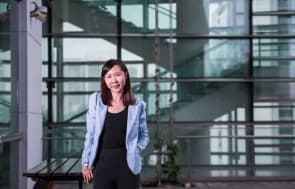
When Candy Eevie Yeo stepped into her role as an Innovation Manager at TUMCREATE, she quickly realised that community building is more than a part of her job – it is her calling.   “Since I joined the research institution in 2022, my focus is on ensuring that scientific advancements don’t just stay in the lab, but create meaningful impact in society,” Candy says.  “This is by designing and leading strategic programs, innovation initiatives, and partnerships that empower research teams to translate their work into real-world solutions.”   This International Women’s Day, supporting the theme ‘accelerate action,’ we had a chat with Candy. Read below about the inspirational figure that fuels her work and her passion for empowering women in the field of science. What does International Women’s Day mean to you? To me, International Women’s Day is about celebrating women who are making an impact – whether in research, technology, business, or beyond. It’s about paving the way for the next generation, ensuring they have the support, opportunities, and encouragement to thrive. It’s about enabling women to drive change in science and innovation, to lead in fields that remain largely male-dominated.    What are some assumptions about women that you hope to change?  I want to challenge the outdated assumptions that all women are risk-averse, less committed due to family priorities, or struggle with authority. These stereotypes not only undermine women’s contributions but also hinder progress in industries that thrive on diversity and innovation. It’s time to move beyond token representation and recognise the real value women bring to shaping the future.    What are some challenges you face in accelerating action as an innovation manager and how do you tackle it? Redefining Perceptions  The challenge: As an Innovation Manager, I am sometimes perceived through a narrow lens, mistaken for an administrator rather than being recognised for my role in shaping strategy and enabling research impact. Such assumptions risk diminishing the significance of my contributions and, more broadly, undervaluing women’s leadership in innovation.  The approach: I counter these misconceptions by speaking out, asserting my expertise, and engaging decisively within the ecosystem. Delivering reliably on the highest standard not only shifts perceptions but also broadens the path for more women to step into influential roles in innovation leadership.  Reshaping Norms  The challenge: Women in innovation often navigate unspoken expectations about how they should present themselves. Assertiveness or directness might be misinterpreted, creating additional barriers to advancing bold ideas.  The approach: I remain steadfast in my vision and adapt to the dynamics of different environments. I challenge outdated norms by substantiating my ideas with strategic insights, by fostering collaboration, and mentoring the next generation of female innovators. Over time, validating my leadership with results has also reinforced a larger truth in my community: innovation flourishes when diverse voices and perspectives are empowered.    How can organisations accelerate leadership in innovation? Organisations have the power to drive meaningful change by implementing and championing flexible programs that support women’s career advancement. By fostering a culture where diverse voices are integral to decision-making, they can create structured pathways that empower women to step into leadership roles with confidence. True progress lies not just in representation, but in ensuring women have the opportunities, support, and visibility to shape the future of innovation and industry.     Lastly, name one woman that inspire you and tell us why? Dame Sue Black, herself a world-renowned forensic scientist, is an extraordinary source of inspiration – especially when she takes the stage. Her career is a testament to resilience, dedication, and the pursuit of excellence. What sets her apart is not just her expertise but her authenticity. She approaches everything with a grounded, relatable presence that makes her impact even more profound. As a passionate advocate for women in STEM, she has championed mentoring initiatives and established programs that have paved the way for more women to thrive in tech and research careers. Her work serves as a powerful motivator for anyone striving to break barriers and drive meaningful change.  

Breaking Barriers TUMCREATE Researcher Dr Resshaya Murukesu

Breaking Barriers: TUMCREATE Researcher Dr Resshaya Murukesu on Accelerating Action for Women in STEM

Women make up less than 30% of the global STEM workforce1, a statistic that highlights persistent gender biases in the field. Navigating a male-dominated industry as a woman in STEM comes with challenges, but for TUMCREATE Research Fellow, Dr Resshaya Murukesu, it fuels a deeper purpose. It is to positively influence the healthy behaviour of older people through health solutions via research.  Besides the importance of advocating for equal opportunities, “mentorship, support, and ensuring that every woman in research and science feels seen, valued, and encouraged to pursue her ambitions with confidence is needed too,” says Resshaya, reflecting on this year’s International Women’s Day theme, ‘accelerate action’.  Transitioning from clinical work to research   “My journey as an ageing health scientist hasn’t always been linear,” shares the mother of one who holds a PhD in Health Sciences from the National University of Malaysia.  “Transitioning from clinical work to research was a leap, and stepping into a leadership role brought its own set of challenges and opportunities. However, every challenge has reinforced my passion for creating solutions that are effective and accessible to people from all walks of life.”  One of the highlights of Resshaya’s research journey is leading the LightSPAN research project in Singapore, which explores how light exposure can be optimised to support health and boost resilience in ageing.   “We investigate how personalised light-based interventions can optimise circadian health, improve mood, and enhance cognitive function in older adults. It’s really interesting to be working on this novel approach that has the potential to reshape how we think about ageing, offering a simple yet scientifically grounded way to support well-being through something as fundamental as light,” she says.  Although her background is in physiotherapy, the drive to make a greater impact led her into the world of research.  “What resonated with me the most as a physiotherapist was the ability to enhance people’s quality of life. I realised that my passion lies in ensuring people not only live longer but also enjoy a fulfilling life with preserved independence. This led me to deepen my knowledge in health promotion and explore strategies that foster resilience in sustainable and accessible ways — leveraging existing resources and abilities rather than relying on complex interventions,” she continues.  Stepping to leadership and overcoming self-doubts  Her transition to leading a research team has been a learning curve. Like many people in leadership roles, she encountered imposter syndrome and often questioned her ability to lead a talented team. However, through the unwavering support and trust of her project’s Principal Investigator, Prof Manuel Spitschan, and team members, she found the confidence to grow into her role.  “I’ve learnt that leadership isn’t about taking centre stage,” she says. “It’s about ensuring that every voice is heard, every skill is valued, and everyone moves forward together. Just like an orchestra, with each individual playing their part, and together, we can create something truly remarkable.”  Challenging assumptions  As Resshaya continues to thrive in the academic environment, she is determined to challenge assumptions that often limit women’s progress in STEM. One of the biggest assumptions she aims to change is the belief that women must choose between career and family.  “I am grateful to work in an environment where having a family is seen as part of who I am, not a limitation,” says Resshaya. “I’ve witnessed how women with children are sometimes questioned or overlooked. Women should never have to prove their dedication simply because they also nurture a family. We can thrive in both roles, by defining balance in a way that works for us.”  She also pushes back against the notion that women must be aggressive to succeed in leadership roles.   “There is power in collaboration, in empathy, in thoughtful decision-making,” she adds. “Being kind doesn’t mean being passive. Women can lead with strength and compassion, make tough decisions, and set firm boundaries, all while uplifting those around them,” she continues. Women Who Inspire  Resshaya looks up to everyday figures that walk beside her as a source of inspiration. These female figures include her mother, sisters, friends, and colleagues who have shown her the power of quiet determination, the beauty of unwavering support, and the importance of showing up for one another.  One word of advice she would like to share with all women in STEM is: “Be fearless. Be brave. Ask the questions that need to be asked; your curiosity and voice matter. Strength in STEM isn’t about fitting into a mould or becoming what you think a scientist ‘should’ look or sound like. It’s about embracing your unique perspective and letting that drive innovation and discovery.” 

TUMCREATE CellFACE-Kerem Biology@CREATE Seminar 250228_ (resized)

Advancing Acute Care: TUMCREATE Research CellFACE at Biology@CREATE Seminar

At the Biology@CREATE Seminar Series on 28th February 2025, TUMCREATE research associate, Kerem Delikoyun, shared how the CellFACE research project addresses and improves acute care diagnostics in clinicians’ emergency decision making.      Kerem spoke about AI-enhanced Imaging Flow Cytometry for Hidden Haematology Biomarkers as part of our research collaboration with Technical University of Munich, Nanyang Technological University, National University Hospital, National University of Singapore and A*STAR’s Bioinformatics Institute and Infectious Disease Lab.  He shared insights on the development of a label-free and point-of-care compatible testing platform to identify early predictive blood cell biomarkers for acute care. CellFACE brings innovative solutions and addresses an unmet clinical need with significant growth and scalability potential. This includes   Point-of-care technology for acute care inflammatory conditions   Quantitative phase imaging based label-free microscopy to improve triage for high risk patients  AI-powered real-time image & data analysis for quantifying rare blood cells as a new set of predictive biomarkers  Workflow that can integrate smoothly in acute care settings (such as emergency department, intensive care unit and operation room for clinicians’ immediate action)    The Biology@CREATE seminar series is hosted by the Singapore MIT Alliance for Research and Technology (SMART) in collaboration with researchers within the Campus for Research Excellence and Technological Enterprise (CREATE).   We look forward to future sessions to continue fostering discussions.   Find out more about the CellFACE project here.

International Womens Day in Science TUMCREATE Dr HuiQi Yeo-featuredimage

International Day of Women in Science Spotlight: Dr HuiQi Yeo’s Passion for Flavour and Research

The science of flavour has always been fascinating for Dr HuiQi Yeo. She joined TUMCREATE in 2022 to work on enhancing food security in Singapore through the AquaCycle research project.  HuiQi’s goal is to identify nutritious, palatable ingredients for food products from aquacultural sidestreams. She aims to create pleasant flavour profiles without bitter off-notes together with collaborators from the Nanyang Technological University.  Her passion and journey into the world of food research sparked early in her academic career when she was pursuing food science and technology at the National University of Singapore.   We sat down with HuiQi to learn more about her work and her motivation behind pursuing a career in research.    Share with us what do you do at TUMCREATE?  I work as an analytical food chemist on the AquaCycle project. My job is to identify and isolate the tasty compounds, specifically peptides, from fermented tuna waste using a combined analytical and sensory approach. Beyond the project, I also oversee the running of the lab and ensure lab activities are performed smoothly and safely together with our colleagues.    What excites you most about your current research project?  AquaCycle is a project about the valorisation of fish waste and the possibility of making something useful out of ‘waste’ is very meaningful. What’s more, I get to taste samples!       What inspired and motivated you to get into the field of research?  My flavour journey began with my Final Year Project during my Bachelor of Science. As a young researcher then, using fancy instruments and learning about the aromas of volatile compounds was fascinating. Despite the advancement in food processing technologies, there is still so much to discover in the vast odorant chemical space. I am still curious about new aroma compounds and enjoy exploring the space of flavours in food items a lot.    What are some challenges you’ve faced in your journey from PhD to working at a research institute and how did you overcome it?   One challenge occurred when I transitioned into the multi-disciplinary research team at TUMCREATE. During my PhD, I worked with colleagues from the same research field where we naturally spoke the same scientific language.   It took some effort to help other team members understand what my team does and why we approach things in certain ways. However, that was also the beauty of it – sharing your discipline with others, learning about theirs and finding ways to collaborate. Having an open mind is one of the keys to communication.    Any advice for young women who aspire to pursue a career in science?  There is a place for everyone in science – career progression is driven by motivation and curiosity. Dream big and work hard for yourself. This way, no one can stop you from reaching for the stars.      What do you like to do outside of work?  I am a gym junkie and enjoy attending pilates, yoga, pump and HIIT classes to take my mind off work. As a foodie with a sweet tooth, I also love checking out new dessert menus in town!

Scroll to Top