TUMCREATE

Edit Template

In The News

Page Preview

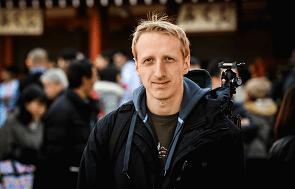
People Behind the Science – Marc Gallet

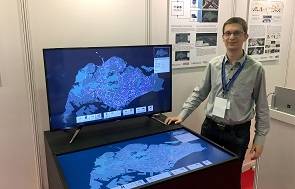
At TUMCREATE, as we prepare to conclude our research in Phase Two – Towards the Ultimate Public Transport System, we would like to highlight our researchers who continue to make significant contributions to the programme. Through our interview series, People behind the Science, we talk to our researchers to discover more about them and their stories.   Marc Gallet from the team Electrification Suite and Test Lab (ESTL) joins us today.   Most TUMCREATE researchers have lived in multiple cities and Marc is no exception. France, Munich and Singapore are all places he calls home. As a well-travelled individual, he dreams of being allowed to become a global citizen one day. With so many to achieve in his life and work, what gets him going is his love for computers and programming. For him, music is a great company when he’s in action – problem solving.    Q: Tell us about yourself and what you do… My name is Marc Gallet and I am a researcher and doctoral candidate in the ESTL team. Our team’s focus is to study the integration of electromobility and renewable energy solutions in the electric grid.   For my PhD topic, I work more specifically on the electrification of public buses. I develop city-scale models to determine the energy needed for electric buses to perform their trips and the electric power required at charging stations to recharge them. My work is at the interface between mobility simulation and modelling and energy system analysis. Coming from an electrical engineering background, I have become very interested in public transportation and mobility models and these past years have been a great learning opportunity.   Q: What made you come to Singapore, and how has it been like living here? It’s actually a long story but here’s the short version! Back in 2012 when I was studying in Munich, I lived in a shared apartment with other international students from all around the world. Each semester, there would be a change of roommates and as fate would have it, I met my future wife! She was doing her semester exchange from Nanyang Technological University. After she returned, I visited her on a holiday and discovered Singapore for the first time. I was greatly impressed by the city. Fast forward to 2017, I got the opportunity to join TUMCREATE and work in my favourite field of research. Without a doubt, I took up the offer and started to settle down and live with her here.   I adapted to the climate and lifestyle here very quickly, especially since I love summers in general, so a place with all-year-round summer is just perfect! My favourite aspects of living in Singapore include the multicultural working and living environment, a great public transport system and the wonderful variety of food.   Q: Who or what inspired you to be in your field of research? During the early days of my studies, I’ve always been attracted to the field of energy, the ubiquity of it and the fact that it will always be an essential. Also, I think that the necessity to move towards more sustainable energy sources and usage is one of the most important challenges we face.   At a young age, I was immersed in computers and love programming. Thus, after my initial studies, I started working in a research institute in Germany where I programmed various models for the forecast and integration of renewable energies. In one of the projects, we studied electric cars with a field test and that intensified my interest for electromobility. In TUMCREATE, I am able to combine both aspects of mobility and energy modelling while working on a concrete case-study.   Q: What are some of the challenges for you in your field of research? In the field of simulation and modelling, access to detailed data from the real-world is one of the main challenges. The data is necessary to improve the models and obtain results that can be accurate and applied outside of a pure academic context.   To give an example, I am simulating the operation of electric buses based on the existing Singapore public bus network. However, the real energy consumption of electric buses in a tropical climate might differ from expectations, like the energy-demand for air-conditioning and local traffic conditions. Since field trials of electric buses have started this year in Singapore, I am eager to discover how my simulation results will compare to real-world measurements and to improve the models based on feedback from the field.   Q: Tell us about your work and journey in TUMCREATE… I joined TUMCREATE in 2017 as a Research Associate to work on the topic of electrification of public road transport. From my research, I wanted to create a city-scale model of bus electrification. This required me to discover and learn more about the public bus network in Singapore. As mentioned, I was quite impressed by its density and level of service but had only personally experienced a few bus lines before. Through this work, I was able to quickly learn about all the different parts of Singapore’s bus network.   Initially, my study used historical data to calculate the energy demand that would be consumed if the current bus fleets were operated with electric buses. However, historical data has its limitations and I needed to pivot towards an approach based on flexible simulations for future predictions. This brought me to contribute to CityMoS, the city-scale mobility simulator mainly developed by the AIDA team. With the help of fellow colleagues from AIDA and students that I was supervising, I lead the implementation of a full model of electric public bus operation and charging within the simulator. Using it, we can simulate a wide range of electrification scenarios for buses with great level of details.   Q: What are some of your plans in the future? For the foreseeable future, I would like to have the opportunity to contribute to the development of electromobility in Singapore.
Page Preview

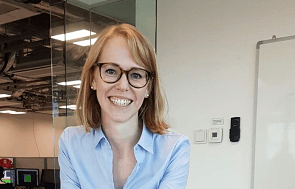
People Behind the Science – Dr Aybike Ongel

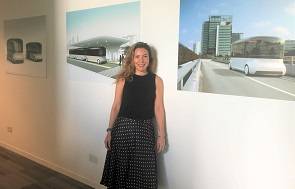
At TUMCREATE, as we prepare to conclude our research in Phase Two – Towards the Ultimate Public Transport System, we would like to highlight our researchers who continue to make significant contributions to the programme. Through our interview series, People behind the Science, we talk to our researchers to discover more about them and their stories.   It’s a pleasure to have Dr Aybike Ongel, Principal Investigator of team Individual Mobility Vehicles and Services (IMVS) with us.   Unlike most people, Aybike always knew she wanted to be a professor since high school. Even though there were times in college when she had spent more of her time having fun with her friends, she was focused on her academics and made sure she never strayed away from achieving high grades to pursue her graduate studies. A go-getter, she shared that she usually takes her lunch breaks in the office and works from home a lot. Who knows, maybe this is one of the secrets behind her achievements?   Q: Tell us about yourself and what you do… I am the principal investigator (PI) of team IMVS, the automotive engineering team at TUMCREATE. Within the team, we develop autonomous electric vehicle concepts and prototypes to solve transportation related problems. I believe that with our tools and methodologies, we can contribute positively to the advancement of autonomous mobility. Also, as an academician, my time is split between writing scientific papers and technical reports, presenting at conferences, and supervising the PhD students in my team.   Q: What made you come to Singapore, and how has it been like living here? I love traveling and living in different places so I have kind of adapted to a nomadic life. Before Singapore, I had lived in the USA and Europe, and at some point, I felt that my experience in Asia was missing. I looked through some options and Singapore, being a very innovative country with a great focus on education and high-quality research, really attracted me.   Now that I’m here, I feel that I have made the right decision. Singapore is not only great for work purposes but also for traveling since it is a great location to explore Asia. Also, the warm and humid weather here really suits my lifestyle as I love doing outdoor activities. It is great to be able to work-out and swim outdoors all year round. I think I should also mention the food, I really love the Peranakan food here!   Q: Who or what inspired you to be in your field of research? Initially, it was my parents who paved the idea of me being a professor. Having academic backgrounds themselves, they really wanted me to pursue their paths. Of course, I had also found being in this profession exciting. I can do research on the topics that I am interested in and have the flexibility in managing my own work, although this comes with a lot of self-motivation! It is also one of the few jobs which you can directly communicate the knowledge and influence the younger generations.   What further made me became confident about my career choice was when I met my masters and PhD advisor. As a great researcher, teacher, collaborator, and leader, he has been my role model ever since. I guess I was very lucky to have met a professor like him, who was able to combine his technical expertise with humility and empathy, to inspire me and many others at the early stages of our careers.   Q: What are some of the challenges for you in your field of research? The main challenge in my research field is collecting experimental and field data. This is especially true for collecting field data as it is very costly and time consuming. Therefore, it requires a huge amount of support such as funding. Additionally, with field data, you are susceptible to environmental constrains, such as rain, snow, and may even have to wait for the conditions to be suitable for data collection. It is also a challenge to have full experimental control.   Q: Tell us about your work and journey in TUMCREATE… I joined TUMCREATE in 2017. When I first joined, my team was mostly working on physical prototypes of autonomous vehicles. After that, we decided to focus on developing virtual prototypes or physical prototypes in a smaller scale, such as SCUBE, autonomous personal mobility device, or human machine interaction systems. Additionally, we try to improve public transportation system through our innovative vehicle concepts which can improve service quality while minimizing cost and adverse environmental impacts.   Together with my team, we developed a parametric vehicle concept development tool for autonomous electric buses called the AEV tool. It can be used in the early phase of a vehicle development process to enable a fast and efficient creation of a flexible bus concept. Using the AEV tool, we also developed the Fleet Optimization Tool, which allows the user to optimize bus concepts while looking at factors like cost, energy efficiency and customer satisfaction. These tools are developed with the aim to help vehicle OEMs and transport agencies.   Q: What are some of your plans in the future? I will be leaving Singapore and moving to Switzerland very soon. My PhD was a collaboration between EMPA Swiss Federal Laboratories for Materials Science and Technology and UC Davis, so I had spent quite some time in Zurich during my PhD studies before. Also, after my PhD, I was a visiting researcher at EMPA for a couple of years. So, I know Switzerland quite well and it is one of my favourite places. I always thought it would be my last stop in my nomadic journey but lets see!   (We wondered if Aybike has always knew what she wanted to be, even when she was a child…)   Q: What did you aspire to be when you were a child? Is any part of that still true? When I was

Page Preview

People Behind the Science – Zhang Kai

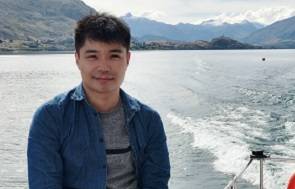
At TUMCREATE, as we prepare to conclude our research in Phase Two – Towards the Ultimate Public Transport System, we would like to highlight our researchers who continue to make significant contributions to the programme. Through our interview series, People behind the Science, we talk to our researchers to discover more about them and their stories.   For this interview, we have Zhang Kai, a research fellow from the team Electrification Suite and Test Lab (ESTL).   At the age of 19, Zhang Kai made a bold decision to move from China to Germany to attend the University of Duisburg-Essen for his undergraduate study. From there, he set out to learn more about the different parts of Germany and decided to move to Munich, where he continued his master studies at the Technical University of Munich (TUM). Before taking up the research position with TUMCREATE, he never thought that being a researcher would be a right path for him. Turns out, it is a perfect fit.    Q: Tell us about yourself and what you do… My name is Zhang Kai and I am a researcher from ESTL. Together with my colleagues, we study the final energy sector of Singapore and come up with ways to create innovative solutions for renewable energy integration and efficient energy system. I have just submitted my dissertation that looks into the market frameworks to facilitate peer-to-peer electricity exchange in power system.   Currently, I am also a part of a research consortium of industry partners and local universities, including SIT (Singapore Institute of Technology) and NTU (Nanyang Technological University), focusing on microgrid management, which is seen by many as the future of power system. My objective is to link the microgrid management platform, that is under development, to the current and future Singapore electricity market.   Q: What made you come to Singapore, and how has it been like living here? Back when I was studying in Germany, I had to decide on where to write my master thesis. The options were between going into the industry in Germany or coming to Singapore. I had never been to Singapore and the idea of spending the remaining of my study in Southeast Asia was very intriguing to me. So, I decided to come to Singapore and this place has been my home ever since.    I really enjoy the diversification and the international working and living environment here. Having lived in both China and Germany, Singapore is an ideal place for me as the culture here has a mix of the east and west. Food is an important factor for me too so it’s great that I never have to encounter the difficulty of finding my new favourite food in Singapore!   Q: Who or what inspired you to be in your field of research? Instead of saying that I was inspired, I think it was the curiosity of the unknown that first got me into research. Then, it was all the people that I had met along the way, especially people with common interests as me, who continued to lead and motivate me to become the researcher I am today. The work I do is also a huge motivation for me to be in this field of research. I want to be a part of something that is able to make a difference in the world and by changing the way we produce and consume energy can help to address global issues like climate change.   Q: What are some of the challenges for you in your field of research? I believe getting to know the full picture and understanding the connections between different sub-areas of the research is the biggest challenge in my field. Energy, as a whole, covers a big spectrum of research fields such as engineering, economics and policies. Yet, I’ve noticed that quite a number of researchers tend to focus and specialize in one of the areas and only attempt to solve specific problems based on their specialties. With these isolations in research, research results may look optimistic in theory but have limitations in real-world applications, when the connections to other areas are not factored in.   Q: Tell us about your work and journey in TUMCREATE… I joined TUMCREATE as a master student in 2015. This was when I first gained knowledge about the energy sector. It was also the first time for me to work in a fully research-based environment. After finishing my master thesis, I decided to pursue my PhD with TUMCREATE in the relevant field of energy economics. I first focused on theoretical approaches for the cost-efficient management of energy system and developed methods accordingly at the beginning of my PhD. After finishing the main work for my program, I decided to steer towards application-oriented research, bringing these developed methods and tools to the next stage through pilot projects, with the hope that they can make an impact and contribute to the transformation of the energy sector in Singapore. This is what my team and I are trying to achieve currently.   On a more personal note, having spent my early twenties as a fellow student in Germany, I have grown a special attachment to the country. So, although I have lived in Singapore for quite some time, I am still very keen on German culture and being in TUMCREATE allows me to keep that side of me. Here, you can always find someone to practice German with so that you do not lose the language along the way! I don’t think it’s easy to find an environment like this elsewhere in Asia.   Q: What are some of your plans in the future? For the more foreseeable future, I think I would like to continue my stay in Singapore. I think this is where I can really gain an understanding of the overall picture in my field of research and have opportunities to test out some innovative ideas for smart energy system in an

Page Preview

People Behind the Science – Dr David Eckhoff

At TUMCREATE, as we prepare to conclude our research in Phase Two – Towards the Ultimate Public Transport System, we would like to highlight our researchers who continue to make significant contributions to the programme. Through our new series, People behind the Science, we talk to our researchers to discover more about them and their stories.   This time round, we have invited Dr David Eckhoff, Principal Investigator of the team Area-Interlinking Design Analysis (AIDA).     From research fellow to principal investigator in TUMCREATE, David’s dedication to his work is indisputable. A computer scientist from Bavaria, Germany, it is a common sight to see him working in front of his computer while drinking caffeinated drinks and listening to repetitive electronic music with headphones on. However, during the weekends, you can usually find him on the football pitch, playing for the German All Stars Singapore team.     Q: Tell us about yourself and what you do… My name is David Eckhoff and I lead the Computer Science team, AIDA, in TUMCREATE. Our focus lies in developing novel modelling and simulation solutions to better understand intelligent transportation systems. What we try to achieve is a digital representation of a large-scale transport system with a high level of detail. I’m also a part of several other research projects, together with NTU (Nanyang Technological University), NUS (National University of Singapore), MIT (Massachusetts Institute of Technology) and ADSC (Advanced Digital Sciences Center), dealing with privacy protection which I believe is an important topic in this day and age.   Q: What made you come to Singapore, and how has it been like living here? I fell in love with the country during my first visit in 2013. The organization, the transport system and the cleanliness really impressed me. Ever since I’ve moved to Singapore, I seem to have become a little bit spoiled because every time I travel overseas now, I get easily annoyed if something isn’t working as smoothly as I’m used to here. I also didn’t really have any problems adapting to the Singapore lifestyle. Although to be honest, the food ‘Laksa’ was a big shock to me, my stomach just couldn’t seem to take it. I also started learning Mandarin here which, I have to say, is way too difficult!   Q: Who or what inspired you to be in your field of research? For me, there weren’t many alternatives. I had spent the majority of my teenage years in front of a computer so naturally my occupation would need to be somehow related to that. I was always curious of how things work so I kind of just steered towards being a computer scientist. I didn’t really give it much thought when I enrolled into a Computer Science study programme. In fact, after my Master’s, when I had the choice of going into industry or academia to do my PhD, I took the route that was more compatible with my sleep cycle. I guess being able to work during the night and have longer sleep in the morning was my main motivation!   Q: What are some of the challenges for you in your field of research? I think the biggest challenge in my field, as well as many other fields of research, is to give your research real-life relevance. Even though in academia it is important to publish papers and optimize your academic numbers, I don’t find it very fulfilling if it is just for that purpose. Fortunately, the work I am doing at TUMCREATE now finds application not only in the Singapore context but also internationally. It is gratifying to see that what you and your team have worked on for so long finally contributes to solving problems in the real world.   Q: Tell us about your work and journey in TUMCREATE… I joined TUMCREATE in 2016 as a research fellow. Shortly after, I was fortunate enough to be given the opportunity to lead a bigger team and shape its research and development strategy. One of our biggest projects and achievements is our mobility simulator, CityMoS. It is exciting being able to contribute to the shaping of such a state-of-the-art software tool and be part of a collaboration with so many talented people. In general, I would say that being able to work closely with both experienced and younger researchers, as well as actively engaging with governmental agencies and industry stakeholders, has definitely been an important experience for me.   Altogether, I believe the CREATE program is a great environment for younger researchers to build their network and participate in interesting research projects. I mean, where else in the world will you have world-leading universities just across the hallway?   Q: What are some of your plans in the future? I definitely see my mid-term and possibly long-term future in Singapore. Together with my team, I would like to continue the work on CityMoS beyond the scope of TUMCREATE Phase 2. I would also be keen to continue teaching at one of the local universities. I’m usually not one to make long-term plans in advance, which is possibly also one of the reasons why I took a somewhat risky adventure of moving to a foreign country in the first place. I like to always have some level of uncertainty in my life and not have everything set in stone.   (Curious, we asked David the following question before we end the interview.)   Q: If you are not a scientist, what do you think you will be doing instead? That’s a tough one… I love playing football but given that I’m not a good enough footballer, this career option would probably not be a viable one. I think what I would really enjoy doing professionally is photography, preferably in the area of landscape, travel or architecture. In fact, given the current situation with COVID-19, my camera has been idle for way too long and I can’t wait to travel and start taking pictures again.   

Page Preview

People Behind the Science – Dr Henriette Cornet

At TUMCREATE, as we prepare to conclude our research in Phase Two – Towards the Ultimate Public Transport System, we would like to highlight our researchers who continue to make significant contributions to the programme. Through our new series, People behind the Science, we talk to our researchers to discover more about them and their stories.   Our first interviewee is Dr Henriette Cornet from the team Design for Autonomous Mobility (DAM).   Even though she grew up in France, Henriette considers herself a bit of a German after having lived in Germany, Bavaria, for 10 years. That makes working in TUMCREATE the ideal environment for her since she is able to practice her German with our German colleagues while discovering new cultures in Singapore. Yes, that also makes her a trilingual who speaks 3 different languages – French, German and English!   Q: Tell us about yourself and what you do… I am the Principal Investigator (PI) of DAM. This includes supervising the research activities of the team, seeking new collaborations, and coordinating the integration of our findings in the research programme. In the team, we focus a lot on human factors such as the interactions between autonomous mobility system and the users and we often find ourselves asking questions like “How can we increase the acceptability of new technologies?” and “How can we make sure that no user, such as people with physical or cognitive disabilities, is overlooked in our considerations?”. So essentially, what we do is to find answers to these questions, using empirical and theoretical research.    Q: What made you come to Singapore and how has it been like living here? I heard about the TUMCREATE project when I was living in Munich and found the project very exciting. I found the design activities led by Professor Fritz Frenkler, from Technical University of Munich (TUM), especially interesting and that was why I accepted the offer to lead his team on his behalf in Singapore.   Since I have moved from France to Germany before, I am quite used to adapting to a different place, so I adapted to Singapore quite quickly. The only thing I still can’t get used to is the hot and humid climate!  As French, after feeling, sorry to say, a bit frustrated with the food options in Germany, I enjoyed the gastronomy of Singapore very much as well. The diversity of food here is impressive. I guess that is something that Singaporeans have in common with us French, we love food!   Q: Who or what inspired you to be in your field of research? I was first inspired when I was studying Material Engineering at the University of Technology of Troyes, France. I took an optional class about “Industrial Ecology”, taught by the philosopher Dominique Bourg, and it was awakening. We were taught to think on much higher levels than we were used to as engineers and to think globally about our responsibility in the development of sustainable innovations. This was probably one of the reasons why I enrolled as a PhD student at TUM, where I discovered the field of urban mobility. Several years later, Professor Frenkler introduced me to design and expanded my views on what design is and can be. He made me realized that design is not only about products and services but also about technology, ergonomics, sociology, ecology, psychology, and even philosophy!   I’d also like to mention two Singaporean female scientists who had influenced me recently. First, Associate Professor Lynette Cheah who leads the Sustainable Urban Mobility research group at Singapore University of Technology and Design (SUTD). Her research on understanding values and influences affecting public expectations of future urban mobility in Singapore was very insightful. Then, Dr Cheryl Chung from Lee Kuan Yew School of Public Policy. She mentioned in one of her talks that researchers and decision-makers should not forget, when collecting data, that there is a unique and individual experience behind each number. I try to keep this in mind in my everyday work!   Q: What are some of the challenges for you in your field of research? The topic of public transport itself is a challenge because of the many layers that are involved in its development and improvement. In cities like Singapore, it is like the “blood system” of the society. On the surface, it is about maintaining the flow of people with their daily activities, but going deeper, there are emotions involved that need to be considered. These emotions influence the travel experience of people within public transport and therefore, their quality of life. This is, by the way, the topic of one of my PhD students, Penny Kong!   I would also say this field is challenging because of the numerous stakeholders involved and you need to speak the language of different disciplines to understand the system and have a positive impact on it. In TUMCREATE, transport planners, computer scientists, engineers and designers all work together and, from my experience, it entails some communication challenges! On top of that, to have your research be meaningful for the society, you will want to include the citizens and the policy makers, who have very different interests, and be able to understand their needs and communicate with them too.   Q: Tell us about your work and journey in TUMCREATE… Working at TUMCREATE has been an incredible opportunity to broaden my horizons. I was unfamiliar with the field of industrial design when I started, and I learned a lot from Professor Frenkler and my team. We started the research activities from scratch and the team grew and expanded. Over time, a strong trust was developed in my team and I really enjoy working with them. Their enthusiasm for our projects motivates me a lot in my everyday work life!   I also appreciate the freedom I have as PI to start new projects and collaborations. I got the opportunity to learn and work with researchers from other disciplines such as

0 (1) edit

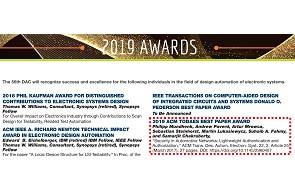
ACM TODAES Best Paper Award 2019

TUMCREATE would like to congratulate our Co-Programme Principal Investigator, Prof. Sebastian Steinhorst, and his co-authors in attaining the ACM Transactions on Design Automation of Electronic Systems (TODAES) Best Paper Award 2019 at the Design Automation Conference. The paper was completed in March 2017 and was financially supported by the Singapore National Research Foundation under its Campus for Research Excellence and Technological Enterprise (CREATE) programme.   As increasing numbers of vehicles are being connected to the outside world, the exposure risk of safety-critical systems rises significantly. With the multitude of communication interfaces, it is very difficult, or even impossible, to reliably control all entry points into the vehicle or shield the vehicular network with firewalls. Hence, it is important that, besides the external access points, communication within a vehicle is secured.   Titled “Security in Automotive Networks: Lightweight Authentication and Authorization”, the paper addresses the challenges of designing authentication protocols for automotive systems and presents the design, evaluation, verification and integration of the Lightweight Authentication for Secure Automotive Networks (LASAN), a full life-cycle authentication approach.   You can find a pre-print of the paper here: https://bit.ly/2WlegEO

20180327_125413 (edit)

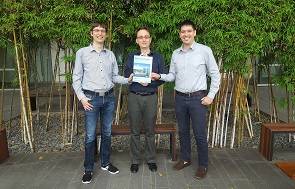
TUMCREATE: Article selected as Top Articles of 2018

TUMCREATE is proud to announce that the article, “Electrification of Road Transport in Singapore and its Integration into the Power System” published in Energy Technology, has been named one of the top articles of the year as the “Best of 2018”! This selection is based upon the download and citation numbers as well as the opinions and feedback of the editorial office of the journal.   This paper is the work of our researchers from the ESTL team – Tobias Massier, Dante Fernando Recalde Melo, Reinhard Sellmair, Marc Gallet, and Thomas Hamacher. It presents a review of past and ongoing activities in the field of integration of electromobility into Singapore’s power system. The focus of this publication lies on charging of electric vehicles (EVs). Results show that the integration of EVs into the power system is feasible, leads to lower emissions, and can even offer new services and support integration of renewable energies.   The article is now free to access on Wiley Online Library until the end of 2019. https://onlinelibrary.wiley.com/doi/10.1002/ente.201700652

newscoveragebanner

News Coverage on electric vehicle developed by TUMCREATE in conjunction with SingPost

Broadcast: Channel NewsAsia, Singapore Tonight, 24 Mar 2017 Channel 5, News 5, 24 Mar 2017 Channel U, News Tonight 晚间新闻, 24 Mar 2017 Print: Business Times, Companies p16, 25-26 Mar 2017 TODAY, Singapore | Business p13, 25 Mar 2017 Online: Channel NewsAsia, 24 Mar 2017, SingPost to trial eco-friendly scooter for mail delivery TODAY Online, 24 Mar 2017, SingPost to trial new eco-scooter Channel 8 News & Current Affairs, 24 Mar 2017, New postal delivery electric vehicles to improve the efficiency of mail delivery (新邮政推出电动邮件派送车 提高邮件派送效率) OpenGovAsia, 24 Mar 2017, Singpost and TUMCREATE to conduct road trials of electric vehicle prototype for mail delivery Post & Parcel, 24 Mar 2017, SingPost to road test three-wheel electric scooters this month Rail and Road, 24 Mar 2017, SingPost, TUMCREATE to conduct electric vehicle trial for mail delivery Business Times, 25 Mar 2017, SingPost launches trial of mail delivery e-vehicle Emobilitaetonline.de, 26 Mar 2017, TUMCREATE entwickelt Elektro-Dreirad für Paketzustellung Connected to India, 27 Mar 2017, Singpost to conduct road trial of electric three-wheeler The Online Citizen, 27 Mar 2017, SingPost: Prototype electric three-wheeler to commence road trial on 28 March

Scroll to Top