
An efficient food system with waste valorisation and nutrient recovery strategy can improve food security in Singapore. With aquacultures playing a key part in achieving the goals of Singapore’s “30 by 30” agenda, it is inevitable that the waste derived from finfish and shellfish processing will increase along with the annual yield.
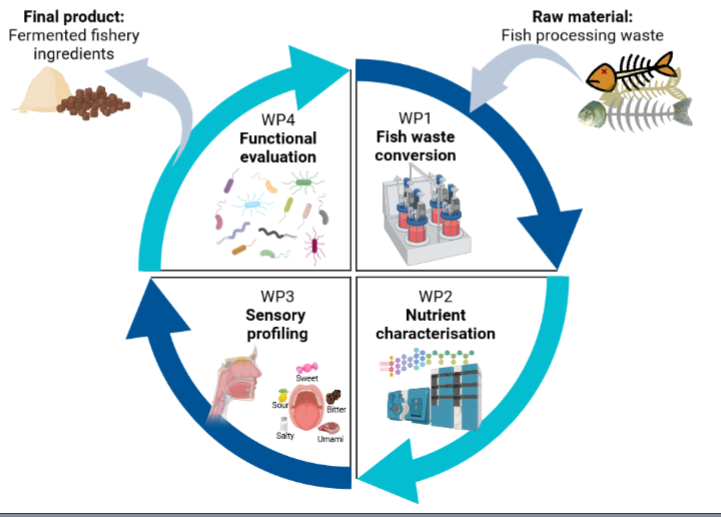
Aquaculture side streams contain valuable food nutrients (proteins, saccharides, lipids, and vitamins) and are currently underutilised. Our research group, which includes researchers from NTU and TUM, proposes developing an integrative approach to efficiently convert fish processing waste into palatable, nutritive, and health-promoting food ingredients.
Key Objectives
- Designing a new approach for handling local aquaculture waste.
- Chemical characterisation of fermented fishery by-products (e.g. nutrients, toxins, and health-promoting metabolites).
- Identification of taste-active and taste-enhancing peptides in fermented fishery by-products using the sensomics and sensoproteomics approach.
- Evaluation of the nutritional and functional benefits of fishery by-products in interaction with the gut microbiome.
Achievements So Far
Toxin Safety Passed: Fermentation of tuna off-cuts using Rhizopus oligosporus under selected conditions did not produce mycotoxins above safety levels, and taste-active peptides were also successfully found using in-silico untargeted peptidomics.